The Book Beyond the Book: Making Companion Materials That Travel Well

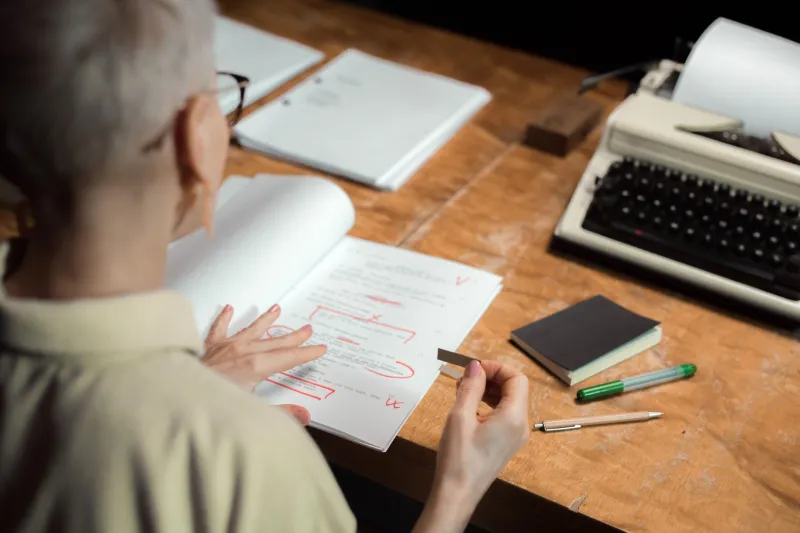
Photo: Philosopher1234, CC BY-SA 4.0, via Wikimedia Commons
A personal growth book rarely ends when the final page is turned. Readers close it with a question, a half-formed intention or a conversation they would like to have. The author's opportunity is to meet that moment with something useful. Companion materials — reflection prompts, notes for reading groups, a concise reading map — can extend a book's life without turning it into a franchise. The aim is not more content. It is better company.
A Companion, Not a Souvenir
There is a temptation to treat extra materials as promotional merchandise: a downloadable PDF, a list of quotations, a bookmark with the cover image. These may be pleasant, but they do not help a reader to act. A genuine companion resource has a clear job. It might help someone return to a difficult chapter, prepare for a book-club discussion or explain the book's central argument to a colleague.
The distinction matters because personal growth readers are often practical people. They want a structure they can use on a commute, in a lunch break or before a difficult conversation. In the UK, where reading groups frequently meet in pubs, libraries and community halls, the best materials are portable and plain-spoken. They should survive being printed at home, folded into a bag and discussed over tea.
Begin With the Reader's Next Step
Before designing anything, it helps to ask what a reader is likely to do immediately after finishing the book. They might recommend it to a friend, choose one idea to try for a week or raise a question with their manager. Each of these next steps suggests a different resource.
A reader who wants to recommend the book needs a short summary that is honest about its scope. A reader who wants to practise an idea needs prompts that are specific enough to be useful and open enough to be personal. A reader who wants to discuss the book needs questions that do not presume agreement. These are modest formats, but they require editorial judgement. They should sound like the book, not like a marketing department.
Three Modest Formats
Reflection prompts are the most familiar companion resource, and the easiest to do badly. A good prompt is not a rhetorical question. It invites a reader to notice something particular: a habit, a hesitation, a conversation they have been avoiding. Prompts should be gathered in small sets rather than long lists, and each set should relate to a clear part of the book. A page of twelve prompts tied to the closing chapter is more useful than fifty disconnected questions.
Book-club notes need a different discipline. They should help a group discuss the book without directing them towards a single conclusion. A short introduction, four or five questions and a suggestion for further reading may be enough. In independent bookshops, where shelf space and staff time are limited, such notes can be printed as a single sheet and offered alongside the book. They signal that the author has considered the reader's social experience of reading, not only the solitary one.
A one-page reading map is perhaps the most underrated resource. It can show the shape of the book: where the argument begins, where it slows down, which chapters stand alone and which are best read together. For workplace book circles, this map is especially valuable. Colleagues may read in fragments between meetings. A clear map helps them find their place and join the conversation without feeling that they have failed to keep up.
Tested in Real Rooms
Companion materials improve when they are tested in the kinds of rooms where readers actually gather. A local reading group in Bristol might find that a prompt about changing a daily routine works well, while a question about long-term ambitions feels too abstract for a Tuesday evening. A bookshop in Edinburgh might discover that a single-page map is taken away more often than a multi-page guide. A workplace group in Leeds might prefer discussion questions that can be covered in forty minutes.
These are not reasons to chase every audience. They are reasons to listen before publication. Authors can share draft prompts with a handful of readers, ask a bookseller which format they would display and speak to a facilitator about what a group genuinely needs. The feedback is rarely dramatic. It is usually practical: fewer questions, clearer headings, a little more space for writing. That is exactly the kind of feedback that makes a resource useful.
Designed Alongside the Draft
Reader resources are often assembled in the final weeks before publication, when attention is divided. A better approach is to design them alongside the manuscript. As each chapter is revised, the author can note the question it raises or the practice it implies. These notes become the raw material for prompts and discussion points. The process also reveals whether the book is making promises it does not fulfil. If a chapter offers no clear next step, the companion material will expose the gap.
This does not mean every chapter needs an exercise. Some ideas need room to settle. But the author should know which ideas are meant to be used and which are meant to be considered. Companion materials should reflect that distinction rather than blur it.
What to Leave Out
Restraint is part of generosity. A companion resource should not attempt to summarise the whole book, correct the reader's interpretation or add a second argument. It should not require an email address to access basic material that was promised on the cover. Nor should it become a testing regime, asking readers to prove that they have changed.
The most durable resources are often the least elaborate: a well-worded page of prompts, a set of discussion notes that a facilitator can adapt, a map that fits on one side of A4. They respect the reader's time and the book's boundaries.
A Generous Ending
A personal growth book earns its place by what readers can do with it afterwards. Companion materials are one way of honouring that work. They need not be extensive, but they should be considered. Designed with care, they turn the final page into an invitation rather than a full stop: a prompt to reflect, a question to discuss, a map for the next part of the journey.