Before the Basket: What Ten Sample Pages Must Prove to a UK Reader
A reader standing in a UK bookshop, or scrolling through a sample on a phone during a commute, is not usually looking for reasons to keep reading. They are looking for reasons to stop. The first ten pages are therefore not a formality. They are a decision point. For the author of a personal growth book, the sample must do more than sound pleasant. It must prove that the book knows what it is for, that the writer can be trusted, and that the reader will receive something of use.
The sample as a decision point
Online retailers and high-street bookshops both offer readers a limited view before purchase. The reader may see the cover, the blurb and a short extract. In a shop, they may read the first page and then turn to the contents. Online, they may read a little more, but often on a small screen and in a distracted moment. In either setting, the opening pages are doing commercial and editorial work at the same time.
This is why authors should treat the first ten pages as a test of the manuscript, not simply as a preface to it. The sample should demonstrate the book. It should not merely describe what the book will eventually do. A reader who reaches the end of the extract should have a clear sense of the promise being made and a reasonable belief that the promise can be kept.
Proof one: a promise that can be restated
The opening pages must make a promise that the reader can put into their own words. If the author cannot state the book's central promise in one sentence, the sample is unlikely to communicate it. A useful test is to write the promise down separately: 'This book will help the reader to...' The sentence should be specific enough to be meaningful and modest enough to be credible.
A promise need not be dramatic. In personal growth writing, overstatement is often less persuasive than precision. A reader is more likely to continue with a book that says it will help them notice a particular habit, ask a better question or approach a familiar problem differently than with a book that claims to transform every area of life. The sample should show the promise in action, not keep it hidden until chapter three.
Proof two: a voice that behaves consistently
UK readers are often wary of hype, especially in personal development. A voice that sounds calm, specific and human will usually earn more trust than one that relies on urgency. This does not mean the writing must be bland. It means the voice should behave consistently across the sample. If the opening is reflective, the reader expects reflection. If it is practical, the reader expects practical help. Sudden shifts in tone can make the book feel less reliable than it is.
Trust is also built through accurate language. Claims should be proportionate. Examples should be recognisable. The author should show competence without turning the sample into a list of credentials. A short anecdote can be effective, but it should serve the reader's understanding rather than delay it. The question to ask is simple: does this paragraph help the reader decide that the book is for them?
Proof three: one idea the reader can use
The first ten pages should offer at least one idea, question or exercise that the reader can understand immediately. It need not be the book's whole method. It may be a small reframing, a one-page audit or a prompt for reflection. What matters is that the sample demonstrates usefulness rather than merely promising it.
This is particularly important for a personal growth book, where the reader is often assessing whether the author can help them think more clearly. A usable idea gives the reader evidence. It also gives the sample a natural shape: the promise is made, the voice earns trust, and then a small piece of value is delivered. The reader may not complete the exercise while standing in a shop, but they can see how it would work.
What to trim from the sample
Opening pages often carry material that belongs later: lengthy definitions, extended author introductions, broad cultural commentary and anecdotes that take too long to reach their point. In a full manuscript these passages may have a place. In a sample, they compete with the reader's attention. Every paragraph should be doing visible work.
Authors should also be cautious about front matter. A dedication or acknowledgements may be part of the book, but they are rarely the reason a reader continues. The sample should reach the reader's concern quickly. If the book needs context, provide it briefly and then move on. The first page should not feel like a corridor before the rooms begin.
A short checklist for the manuscript
- Can I state the book's promise in one sentence, and is it visible within the first few pages?
- Does the opening name a problem or desire that the intended reader recognises?
- Is the voice consistent, credible and free from unnecessary hype?
- Is there one usable idea, question or exercise within the sample?
- Have I removed material that mainly serves the author rather than the reader?
- Does the sample reflect the tone and structure of the rest of the book?
- Would a reader know who the book is for and, just as importantly, who it is not for?
- Does the sample end with a reason to continue rather than a summary of what has been said?
Putting the test to work
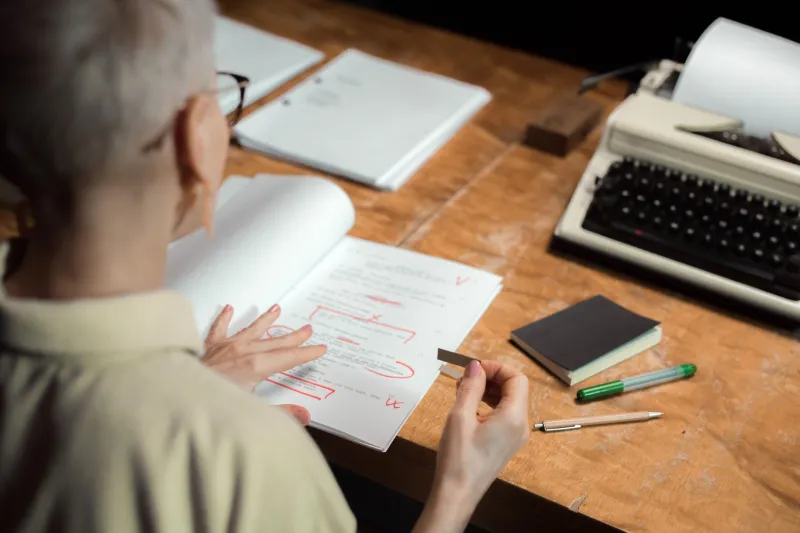
A practical method is to print the first ten pages and read them as though you had never seen the manuscript before. Mark the moment where the promise becomes clear. Note where the voice feels most trustworthy. Find the first genuinely usable idea. If any of these elements is missing, revise the sample before revising the rest of the book.
It is also worth reading the pages on a phone, as many UK readers will. Short paragraphs and clear transitions matter. A bookshop browser may read only the first page, so that page should carry weight on its own. The sample is not a summary of the book. It is an early demonstration of its value. When the first ten pages make a clear promise, establish a reliable voice and offer something the reader can use, the book has already begun to keep its word.