Listening While Walking: A Gentle Audiobook Practice for Everyday UK Routes
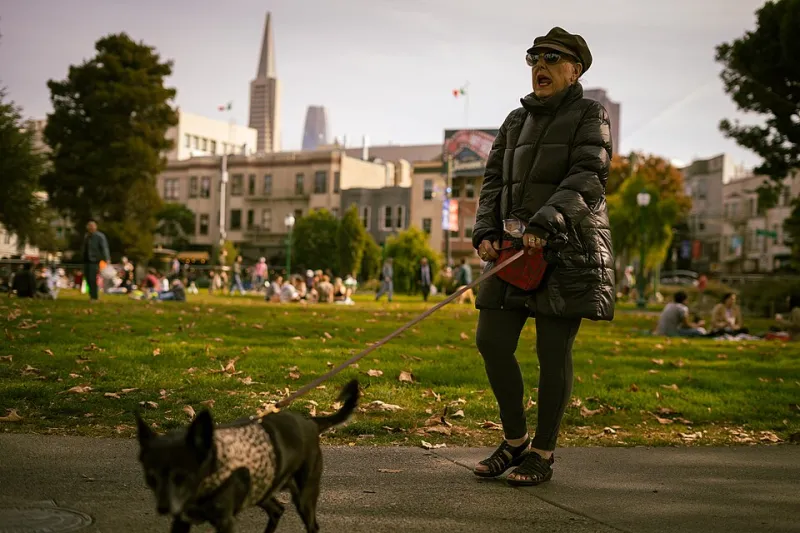
Photo: Michael Slaten, CC BY-SA 4.0, via Wikimedia Commons
There is a particular quiet that arrives when you leave the house with nothing but headphones and a destination you already know. No map, no errand complicated enough to require planning, no screen. Just a path you have walked a hundred times and a voice in your ear that is trying, patiently, to tell you something.
Audiobooks have become the default companion for many readers, but they are often consumed in the gaps of the day — in the car, at the sink, on the treadmill. The walking listen is different. It has a beginning, a middle and an end, and it happens outdoors, which is where most of us do our best thinking without noticing that we are doing it.
What follows is a practical method, not a manifesto. It asks for no new subscription, no additional app and no extra screen time. It asks only that you notice which routes you already walk and choose your listening accordingly.
Start With the Route, Not the Book
Most audiobook habits collapse because the book is chosen first and the listening happens wherever there is a spare moment. Reverse the order. Look at the walks you genuinely take — the park circuit, the canal towpath, the twenty minutes to the station, the high-street errand that is never quite as quick as you expect — and note how long each one actually lasts. Be honest about the queue at the pharmacy.
Once you know the duration, the book becomes easier to select. A forty-minute loop wants a book with chapters of roughly that length, or a run of short essays that can be left mid-thought without losing the thread. A fifteen-minute walk to the bus stop suits something episodic: a memoir told in vignettes, a series of reflections on a single theme. Length-matching is not fussiness. It is what allows a walk to end at a natural pause rather than in the middle of an argument you will have to reconstruct tomorrow.
What Makes a Good Walking Book
Not every title survives the transition outdoors. The following qualities tend to help:
- An unhurried narrator. Pace matters more than accent. A reader who leaves space between sentences gives you room to look at a tree.
- Short, self-contained sections. Chapters that can be finished within a single walk, or abandoned without guilt.
- A subject that rewards attention but does not demand it. You are crossing roads. You cannot be reconstructing a five-part argument while doing so.
- Availability through your local library. BorrowBox and Libby, offered by most UK library services, allow you to trial a title without spending anything. If it does not suit the pavement, return it.
Avoid, at least at first, anything with charts, diagrams or a heavy reliance on visual material. You cannot consult a figure while walking, and the attempt to hold one in your head spoils both the book and the stroll.
The Towpath, the Common and the High Street
Different routes suit different listening, and it is worth choosing deliberately rather than by default.
A canal towpath is linear and repetitive, and repetition is a gift. Memoir, essays and quiet nature writing sit well here; the rhythm of the water does some of the work of holding your attention. Canal & River Trust towpaths are, in many towns, the most reliable flat mile available.
A park or common is usually circular, which means you can build a small ritual: one chapter per lap, the book ending as you reach the gate. This is the closest thing to a guaranteed habit that a reader can construct.
A high street is fragmentary by design. Errands interrupt. Choose something you can leave and rejoin without resentment, and keep one ear free on busy pavements and at crossings. The Highway Code applies to pedestrians as well as drivers, and no chapter is worth a collision.
One Idea, Sixty Seconds
The walk becomes a practice only when something of it survives the doorstep. Before you take your coat off, record a voice note: one idea that landed, why it landed, and one thing you might do differently as a result. Sixty seconds is ample. Do not aim for insight; aim for accuracy.
At the end of the week, listen back once, on a single sitting. Anything that still feels true, write down in a notebook or a document. Anything that no longer does, let go. The point is not to accumulate notes. It is to notice which ideas are sturdy enough to travel from the towpath into ordinary life.
A Four-Week Beginning
Week one: one route, one short book, no note-taking. Simply establish that the two things go together.
Week two: the same route at the same time, with a sixty-second voice note at the door.
Week three: add a second route and a second title. Notice whether the change of place changes what you hear.
Week four: listen back to every note you made and keep the one idea that has proved most useful. That is your first month.
The Point of It
This is not a productivity system, and it will not make you read more books than the next person. The point is gentler and more durable: a walk you were already taking becomes a place where you think. The errand acquires a second purpose. The park loop stops being a loop.
If you take nothing else from this guide, take the pairing itself — one familiar route, one well-matched book, one minute of reflection at the door. It costs nothing, it requires no screen, and it works best in the sort of weather that makes a good coat worth owning.