A Handrail, Not a Corridor: Sizing the Back Matter of a Personal Growth Book
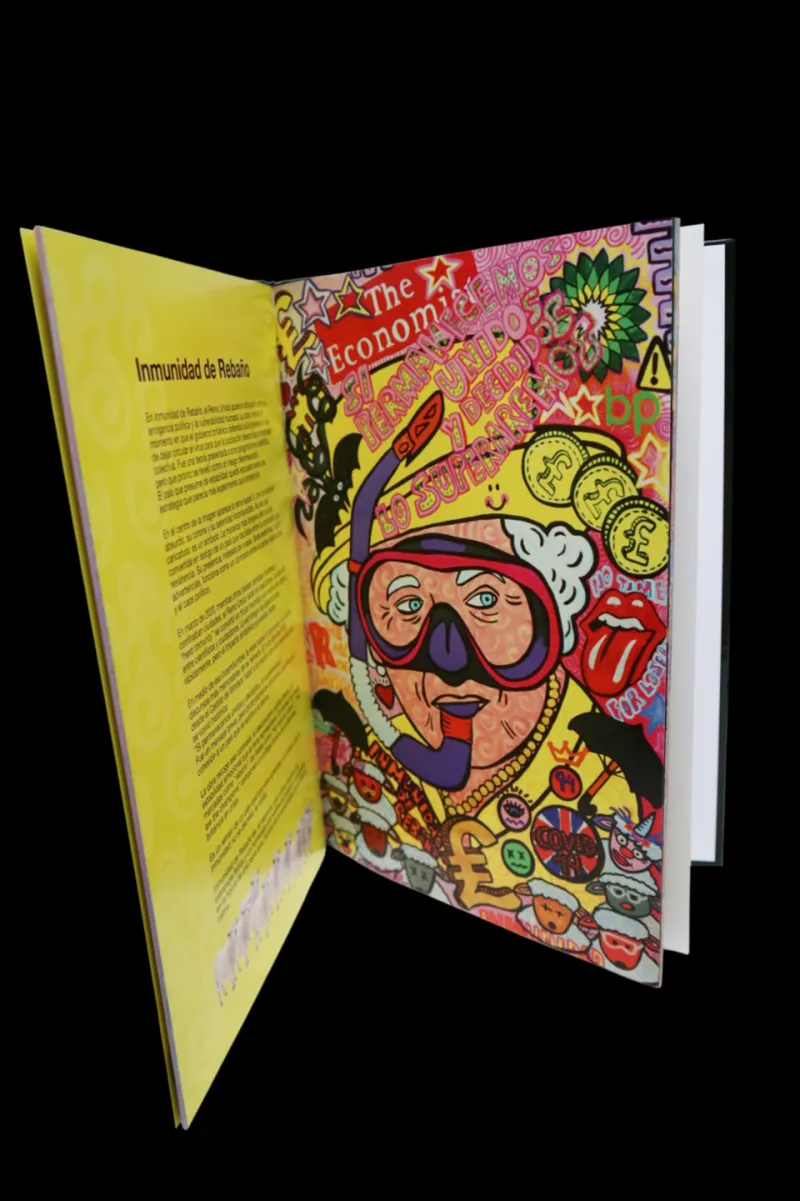
Photo: HonysTorresArt, CC BY-SA 4.0, via Wikimedia Commons
There is a moment, somewhere around page two hundred and forty, when a reader finishes the last paragraph of a personal growth book and does not close it immediately. They turn to the back: to the notes, the acknowledgements, the list of further reading. It is a slightly hopeful gesture, like looking out of a window after finishing a conversation. What they find there will either extend the book's usefulness or confirm that the conversation is over.
Back matter is too often assembled last, in haste, by an author who has run out of energy for the manuscript. Yet it is one of the few places where a book can be generous without being longer.
Why readers go to the back
Three reasons, broadly. The first is verification: the reader wants to know where a particular claim came from, or whether a study quoted in chapter four exists. The second is continuation: they have finished the book, want to keep going, and are looking for signposts. The third is companionship: some readers simply want to know whom the author read, who helped, and what they think is worth reading next.
None of these readers is asking for a bibliography of two hundred items.
A handrail, not a corridor
The distinction is worth holding on to. A corridor is something you walk down; it takes you away from the room you were in. A handrail is what you hold on to as you move — it steadies you without determining your direction.
Back matter that behaves like a corridor overwhelms: dense notes, unexplained citations, a further reading list of fifty titles with no annotation. Back matter that behaves like a handrail gives the reader three or four places to go next, each with a sentence explaining why it might be worth their time. It leaves gaps on purpose. It trusts the reader to find their own way from there.
What earns a place in print
A short rule serves well: print what the reader needs while they are still reading; put online what they will need afterwards.
In print, that usually means notes for direct quotations and for any claim a reader might reasonably wish to check; a brief note on method or sources where the book draws on research; and a short, curated further reading section, ideally annotated in a line or two. If the book contains exercises, an appendix with blank templates or a condensed index of them is welcome and is frequently asked for.
What does not need to be in print: the complete bibliography of every idea the book touches, web addresses that will be obsolete within two years, or a list of every author who has influenced you since university.
What belongs online
A simple companion page — one address, kept current — can hold the longer bibliography, downloadable worksheets, corrections and the reading list you will want to add to over time. Print the address once, prominently, and resist the temptation to print it six times. A reader who wants more will find it; a reader who does not will be spared the clutter.
What belongs nowhere
Some back matter exists because the author could not bear to let go. The long list of people who helped in unspecified ways. The defence of a minor point no reader has challenged. The appendix that repeats chapter seven in a different font. These cost paper and patience. If a page would not change a reader's next hour, it probably does not need to be there.
A short audit
Before the manuscript goes to the typesetter, take the back matter apart and ask of each item:
- Who is this for — the reader mid-book, the reader afterwards, or the author?
- Would a reader be annoyed to find it missing? If yes, keep it.
- Can it be checked in a minute? If not, is the note clear enough to be useful?
- Will it still be accurate in three years? If not, put it online where it can be corrected.
- Does it duplicate something in the main text?
- Would you read it yourself, in a book you had just finished?
Six questions, and most manuscripts lose a third of their back matter to them. That is not a loss. A shorter, well-chosen set of notes is read; a long one is skipped.
The library dimension
UK readers borrow. A significant proportion of the people who finish your book will do so with a library copy, renewed twice, possibly reserved from another branch through the inter-library network. This matters for back matter in two ways. First, anything the reader is asked to write in, tear out or download should be accessible without owning the book. Second, further reading should, where possible, point to titles that libraries hold rather than books that are difficult to obtain outside a specialist bookshop.
A generous back matter is one that has thought about the reader who has borrowed the book, returned it, and wants to keep thinking.
Holding the handrail lightly
The best back matter does something modest and difficult: it acknowledges that the book is not the whole of the subject, and then it points helpfully at the rest. It does not clutch. It does not perform its own erudition. It simply says — here is where I went, and here is where you might go next.
That is the handrail. Size it accordingly.